By late September the leaves are turning, the evenings are closing in, and the first serious gales are usually only a few weeks away. For anyone who owns a house, that makes autumn the last comfortable chance to look at the roof before winter starts testing it.
You do not need to climb up there to do it well. Most of what matters can be spotted from the ground, from an upstairs window, or from the loft hatch — and a slipped tile found in October is a far smaller problem than the damp patch it becomes in January.
Decide first what you are realistically willing to do yourself. A walk around the outside of the house is sensible for almost anyone. Ladders and roofs are a different matter.
Take binoculars and your phone, and go round all four sides of the building. Look up from every angle, including the side you never visit because the bins live there. Photograph anything that looks wrong; zoomed-in phone pictures are surprisingly useful when you want to compare the same spot next spring.
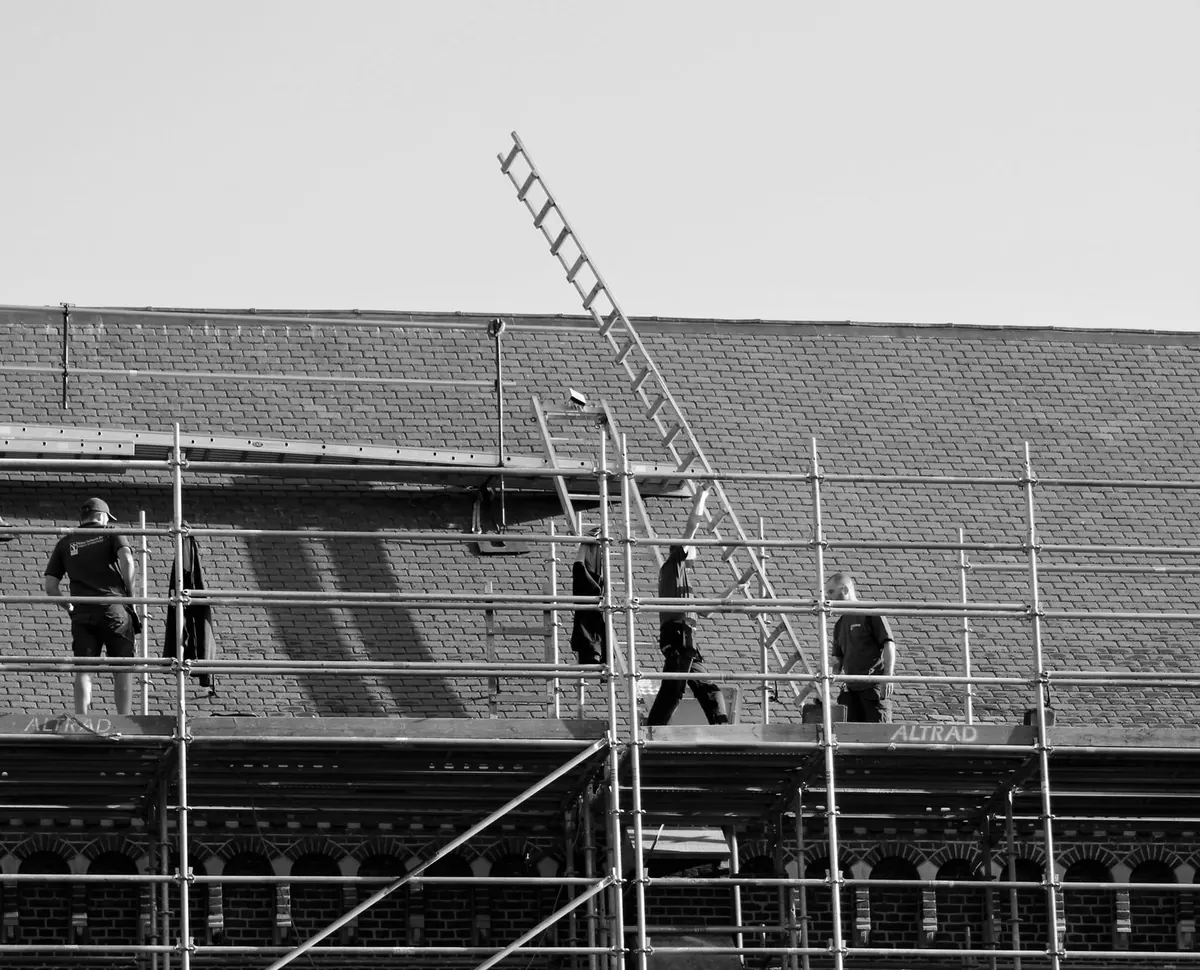
If you do use a ladder, put it on firm, level ground, secure the top, and keep it away from the guttering — gutter brackets are not built to carry the weight of a ladder and a person. Stay off the roof altogether if it is wet, frosty or mossy. On a house of more than one storey, or if you feel at all uneasy about heights, book a qualified roofer and stay on the ground.
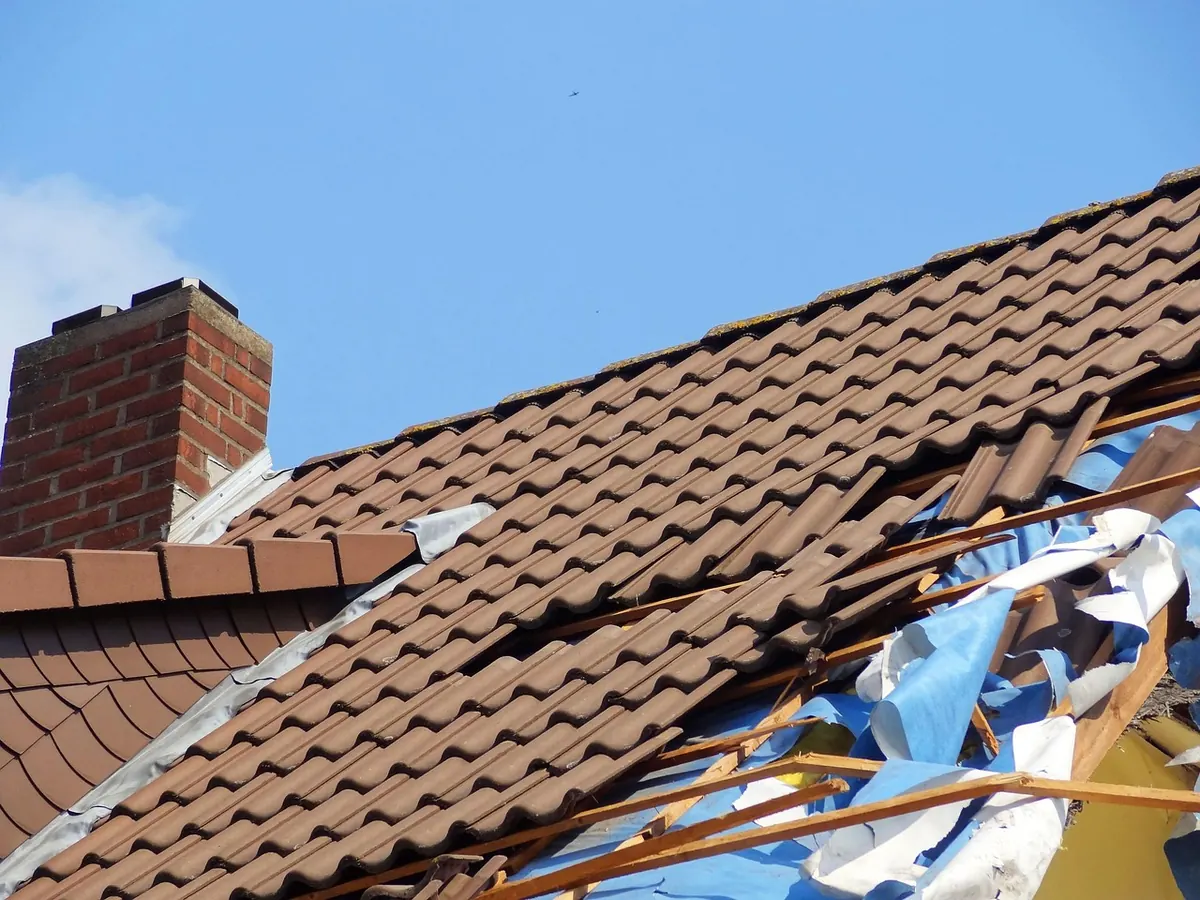
Scan the slopes for anything that breaks the pattern: a tile sitting proud of its neighbours, a gap in the courses, a corner that has lifted. On slate roofs, look for slates that have slipped down or shifted sideways. Slates are usually fixed with nails, and older nails corrode and lose their grip, so a few slipped slates after a windy spell is usually a sign of age rather than bad luck.
Check the ridge along the top and any hips at the corners. These are bedded in mortar, which cracks and crumbles over time. Gaps between ridge tiles let water in at the highest point of the roof, where it can travel a long way before it shows up inside.
Moss is more than a cosmetic annoyance. It holds moisture against the tiles, and when that moisture freezes and expands it can lift tile edges and push mortar apart. Large clumps also break free in storms and block gutters.
A light brush or a treatment applied by a specialist is usually enough. Avoid pressure washing a tiled or slate roof: the jet strips the surface and forces water where it should not go, often doing more harm than the moss did.
Stand back and look at the roofline. A dip or a wave in what should be a straight run of tiles suggests something underneath has moved — a failing batten, a rotten timber, or a structural problem. That is not a weekend job; it needs a roofer, and sometimes a surveyor, to look at it properly.
Joints and junctions are where most leaks start, so give them more attention than the open slopes.
Guttering is the cheapest part of the roof to look after and the most likely to cause expensive damage if ignored. Water that cannot get away has to go somewhere, and it usually ends up in the wall, the foundations or the loft.
Clear leaves and debris from the gutters, then check:
Take a torch into the loft on a dry day. You are not looking for rain; you are looking for the evidence it left behind. Staining on rafters, battens or the underside of the roof felt points to a leak that has been running for a while, and chalky white tide marks are a useful clue. Check whether anything is sagging, and whether daylight is visible between tiles or slates. A few pinpricks are normal; obvious gaps are not.
Pay particular attention around the chimney breast and any soil pipes. Make sure insulation is not pushed right into the eaves, where it can block the ventilation that keeps roof timbers dry.
Anything involving working at height, replacing tiles or slates, renewing flashings or repointing a chimney belongs with a qualified roofer. If you have found a problem, get two or three written quotes that set out exactly what will be done, and ask about insurance and any guarantee on the work. Be wary of anyone who turns up uninvited after a storm and offers to fix things on the spot.
Sorting a slipped tile or a blocked gutter in October takes an afternoon. Sorting a saturated ceiling, damp plaster and rotten timbers in February takes a lot longer. An hour with a pair of binoculars now is time well spent.
Photo: hans middendorp / Pexels